
It was all fun and games on the expo floor at this year’s CAI Central Florida CA Day & Trade Show — until the topic of spreadsheets came up.
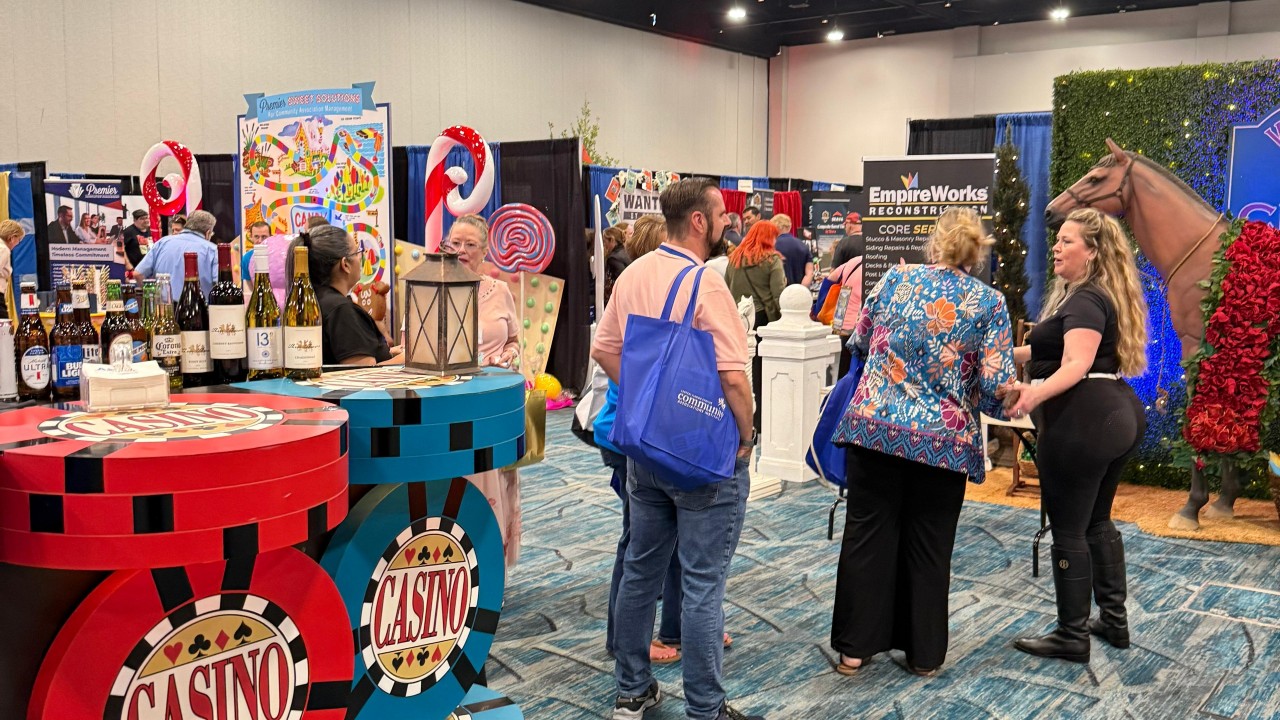
CAI’s event combined an educational series for HOA board members with a trade show; all set within a classic game-themed industry showcase. Exhibitors decorated their booths to match the theme, creating a lively and engaging atmosphere.
Nearly every booth featured a game designed to spark conversation. Prize wheels, putting challenges, and creative displays brought energy to the exhibit hall and made it easy for attendees to stop, engage, and connect.
From the outside, the event looked like many conferences: the name badges, the search for parking, and the memorable swag leaving the exhibit hall. But once inside, it quickly became clear that the real value of the event wasn’t the games or giveaways — it was the conversations.
For EZRS®, those conversations were led by François Zanni, CCO of Easy Reserve Study®, who attended the event to connect directly with members of the community association industry.
Throughout the day, one thing stood out clearly: the professionals who support community associations and homeowners associations (HOAs) care deeply about the work they do. Property managers, board members, and service providers alike were eager to share their experiences and discuss the realities of managing long-term community infrastructure.
And in conversation after conversation, a familiar theme surfaced.
Spreadsheets.
Despite the scale and complexity of reserve planning, spreadsheets remain the backbone of how many reserve studies are managed, updated, and communicated. According to the Community Associations Institute (CAI), more than 75 million Americans live in community associations, making long-term capital planning a critical responsibility for boards and property managers.
Yet many professionals described spending significant time navigating fragmented data sources, maintaining formulas, and transferring information between systems.
In one conversation while waiting in line for coffee, François spoke with a professional responsible for transferring inspection data into spreadsheets. Moving information between systems introduces unnecessary manual work and increases the potential for errors — errors that can ultimately leave communities underfunded when major infrastructure repairs arise.
This challenge is not unique to one organization. Across the industry, professionals often rely on spreadsheets because they are flexible and familiar — even though they were never designed to manage complex multi-decade capital planning models.
Another common question surfaced repeatedly throughout the day:
Why can’t reserve studies be modernized?
Today, professionals often sift through 65–100 page reserve study reports to locate a specific detail, then compare it with a spreadsheet that may have been created years earlier. The process is time-consuming and makes it difficult to quickly answer the questions boards and communities depend on.
For background on how reserve studies work and why they matter, the CAI Reserve Study Standards provide a helpful overview of the role reserve planning plays in protecting community infrastructure.
Across breakfast discussions, exhibit hall conversations, and evening networking events, one message became clear:
The industry is ready for positive change.
The professionals who support community associations carry significant responsibility. They help communities plan for major infrastructure investments, manage financial risk, and communicate complex decisions to boards and homeowners.
Yet many of the tools supporting this work were never designed for the complexity of modern reserve planning.
Spreadsheets remain flexible, but they often require significant manual effort to maintain. Reports can be difficult to navigate. Data lives in multiple places. And updating long-term plans when conditions change can become a time-consuming process.
What many professionals shared throughout the day was not frustration with the work itself — but with the tools used to do it.
Reserve specialists, property managers, and community leaders are looking for ways to make reserve planning clearer, faster, and easier to manage while maintaining the accuracy and transparency communities depend on.
At Easy Reserve Study® (EZRS®), those conversations are exactly why we were founded.
Our goal is simple: to help modernize the way reserve studies are created, updated, and understood — reducing reliance on fragile spreadsheets and bringing long-term planning into a more intuitive, centralized environment.
Events like CAI’s CA Day & Trade Show play an important role in that process. They allow us to listen, learn, and better understand the real-world challenges professionals face every day.
Because the future of reserve planning won’t be shaped by software alone.
It will be shaped by the people who care deeply about helping communities plan responsibly for the decades ahead.
Industry Resources:
CAI Community Association Institute
Florida Structural Integrity Reserve Study (SIRS) information